BARROWS
Descending from Great Yarmouth, Norfolk, England
The Journey to Salem

John Borowe Barrus - Barrows
BIRTH 12 JUNE 1609 • Great Yarmouth, Norfolk, England, UK
DEATH 18 FEBRUARY 1692 • Plymouth, Plymouth County, Massachusetts
9th great-grandfather to Jordan Smith Saalfrank
John was listed as a cooper for his trade. Coopers in Great Yarmouth endured seasonal, backbreaking labor, driven entirely by the town's booming herring and fishing industry. They crafted and maintained the watertight wooden barrels used to salt and export catches worldwide. Life was highly stressful in the autumn, as they labored in high-demand, high-salt environments alongside the migrant "herring girls" who gutted the fish.
The idea of moving to Salem, Massachusetts, would have been presented to a 26-year-old cooper in Great Yarmouth during the 1630s Great Migration not as a wild adventure, but as a deeply structured, spiritually righteous, and highly profitable business opportunity.
BARROWS' of MASSACHUSETTS
The John Borowe Barrus - Barrows and his wife, Anne made their way from Yarmouth, Norfolk, England to Salem in 1637 where they were granted 5 acres of land, and later 10 additional acres. John settled in Salem for approximately 28 years. Anne passes away (possibly during childbirth) on November 5, 1639 so John is left to raise their son, Robert.
John Barrows and remains in Salem with his young son until 1665/66 where court records find John in Plymouth. At the time of John's death in 1692 it is written in the inventory of his estate that he owned 30 acres of land in Monponset (Plympton).
In 1667 Robert John Barrows - at the age of 27, having been newly married to Ruth Bonum, is documented to have been "granted 6 acres of swampy meadow"in what would become Carver, Massachusetts. 30 January 1669 it was documented that the Homestead of Robert Barrow contained 2 acres or more - described as lying northerly side of common road that goes to Plymouth called Mill St. (afterwards called "Kings Highway", afterwards Summer St.) has boundaries beginning at post in a fence, adjoining to westerly side of Capt. James Warren's stable, nigh the meeting house, thence extending westerly till it meets land that leads from the corn mill up to Fort Hill and on till it returns to the stable 1st mentioned.This land originally was in possession of Robert's father-in-law, George Bonum, who conveyed it to Robert Barrow.
For generations, the Barrows family continued to collect and farm more and more land in Carver, Massachusetts.

SALEM
1637 - 1665/66
Settled in 1626 and founded in 1692, Salem is one of America's oldest settlements. Originally called Naumkeag by Native Americans, Salem is world-famous for the 1692 Salem Witch Trials, and later grew into a major global maritime and trading port.

PLYMOUTH | PLYMPTON
1665/66 - 1692
1640 was the earliest recorded history of the land which now forms Plympton. Plympton was established as the western parish or precinct of Plymouth around 1662. In 1695 Plympton was incorporated and the first meeting house was built.

CARVER | SOUTH CARVER
1667 - 1847
Carver was first considered a settlement outside of Plymouth around 1660, Carver was established as the South Precinct of Plympton in 1732 and then signed into charter as a separate town on June 9, 1790.
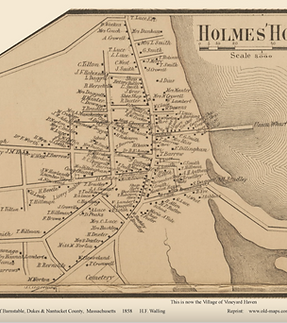
TISBURY | HOLMES HOLE | VINEYARD HAVEN
1830 - 1863
Tisbury was settled around 1660 and incorporated in 1771, originally encompassing both Tisbury and modern West Tisbury. It's historic primary harbor village was known as Holmes Hole, which came from Wampanoag and early settler names, before officially being renamed Vineyard Haven in 1871.
Resources:
Records of the Town of Plymouth; Vol 1 pg 91.

BARROWS
GENEOLOGY
A COMPLETE LIST